


Worried about unexpected vet bills?
Pet insurance can cover thousands in unexpected vet costs. Get a free quote from Lemonade in under 2 minutes.
Get My Free Quote →Sponsored · Opens Lemonade.com
Your Dog Has Been Studying You Since the Beginning
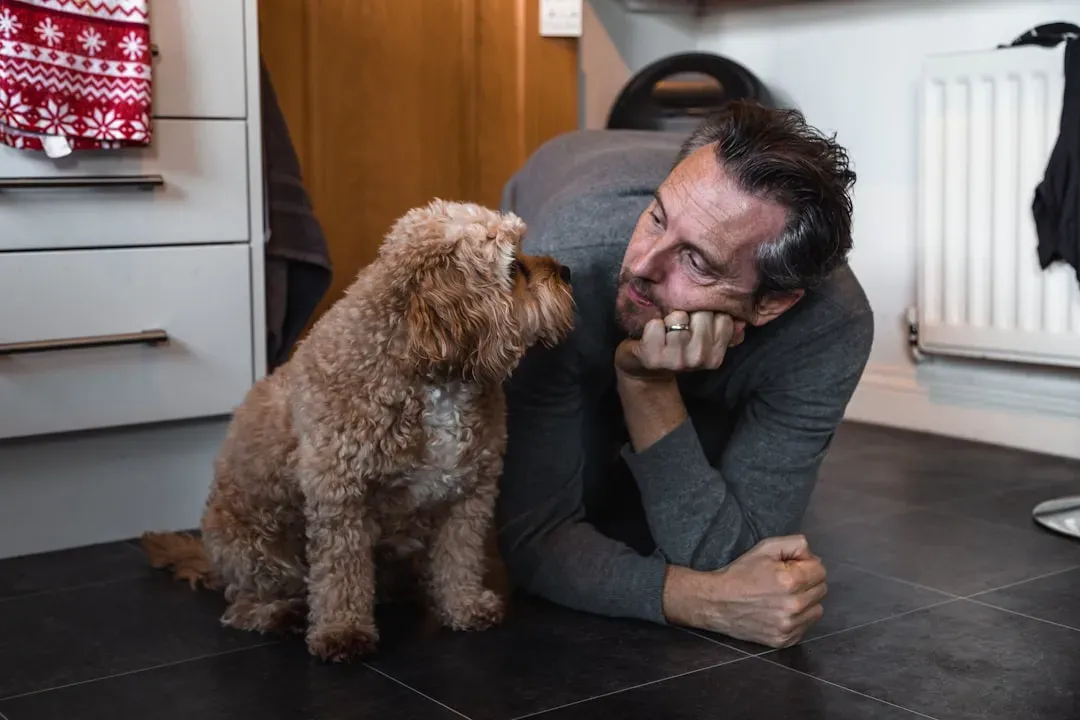
Dogs use a remarkable range of senses to interpret the world around them, including the ability to detect subtle changes in our scent caused by hormonal shifts and stress-related chemicals released during emotional distress. This isn’t a casual sensitivity. It’s the result of thousands of years of co-evolution, during which dogs became extraordinarily skilled at reading the very species they lived beside.
Dogs are able to discriminate between happy and blank faces in photographs, and they are most reactive to commands when their owners display happiness rather than neutrality or discomfort. What that means in practical terms is that your energy level, your facial expressions, and the warmth in your voice are things your dog is actively interpreting every single day.
Research supports that dogs spontaneously discriminate between positive and negative human emotions, and studies on emotional contagion have shown that dogs are affected by both visual and auditory emotional expressions. They’re not simply reacting to commands. They’re responding to you as a whole emotional presence, and when that presence changes, they feel it.
Laughter Is a Language Dogs Genuinely Understand

A study using brain imaging technology to assess brain activity found that dogs can detect emotions such as happiness or sadness, and additional studies showed that dogs have more brain activity in response to human voices than background noise, likely indicating that dogs can distinguish between a happy sound like laughter and a sad sound. Laughter, it turns out, is one of the clearest emotional signals we send.
Research showed that dogs reacted favorably to positive sounds including laughter, with the auditory cortex of the brain responding more to the sound of a human voice than to non-vocal noise, and dogs responded differently to the sounds of laughter than to the sound of a cry. In a dog’s inner world, the sound of your laughter carries real meaning. It signals safety, warmth, and connection.
The science of canine behavior explains that dogs recognize laughter as a positive feedback loop, reinforcing behaviors that connect them to their owners. So when that laughter becomes less frequent, less spontaneous, or disappears for long stretches, it isn’t neutral background noise to your dog. It’s an absence they register in a surprisingly profound way.
The Science of Emotional Contagion Between Dogs and Their Owners

When owners experience higher stress levels, their dogs display corresponding increases in cortisol, and conversely, when owners are less stressed, the cortisol levels in their dogs also decrease. This isn’t anecdotal pet owner folklore. It is measurable, documented biology. Your emotional state flows directly into your dog’s body chemistry.
In a study from Sweden’s Linköping University, researchers found that dogs’ stress levels were greatly influenced by their owners and not the other way around, with findings suggesting that dogs, to a great extent, mirror the stress levels of their owners. The relationship, at its physiological core, is not equal. You shape them far more than they shape you.
Researchers describe the emotional connection between humans and dogs as the essence of the relationship, noting that dogs are social beings easily influenced by their owner’s warmth and joy, but that the converse is equally true, meaning an owner’s stress and anxiety can also become the dog’s stress and anxiety. This interspecies emotional contagion has a psychological, physiological, and behavioral basis.
What Happens Inside a Dog When the Household Goes Quiet
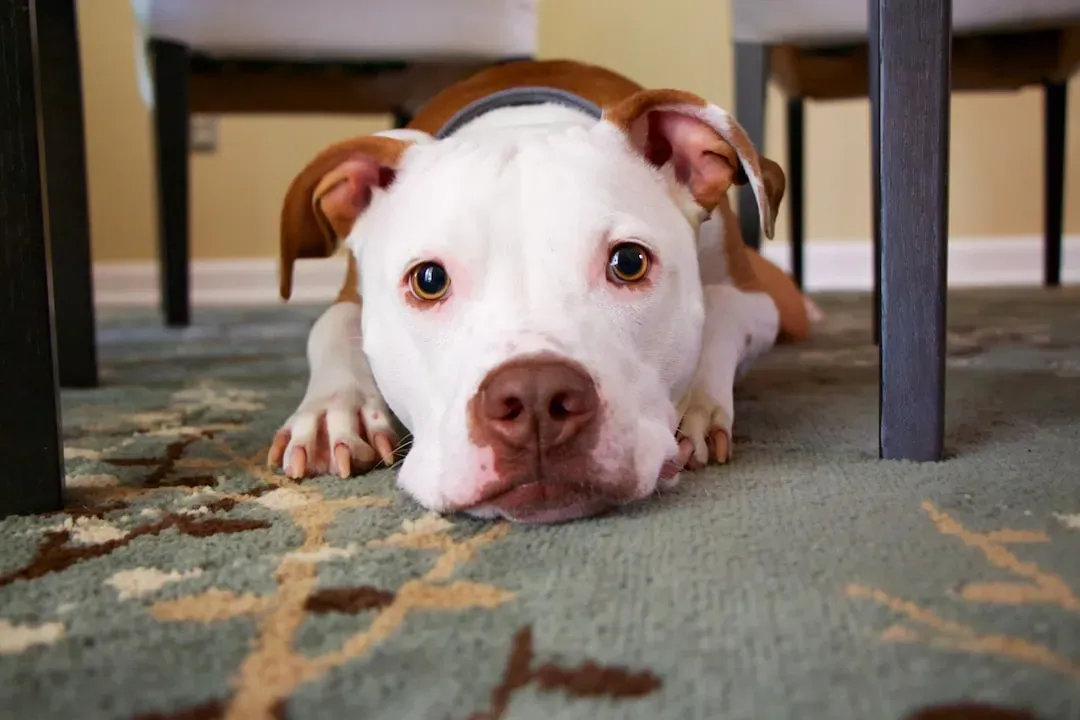
Prolonged or chronic stress may compromise a dog’s overall health and welfare by weakening their immune system and causing behavioral issues, and feelings of stress, depression, and sadness are often triggered by periods of change or inconsistency in a dog’s life. A home that used to be full of noise and laughter and play, and then gradually isn’t, qualifies as exactly that kind of change.
Dogs are highly sensitive to their owners’ emotions, and an owner’s depression can affect a dog’s mood and behavior, with stress, sadness, or emotional withdrawal potentially leading a dog to mirror those feelings and become withdrawn themselves. It’s a quiet, invisible process. There’s no dramatic event, no single moment of loss. Just a slow dimming that a dog absorbs over time.
One study found that dogs show the same stress levels as their owners, and as a result, some dogs may become depressed if their owner shows signs of depression. The dog isn’t reacting to a concept. They’re reacting to a felt change in their environment, and their environment is largely made of you.
The Behavioral Signs of a Dog Quietly Grieving

Depressed dogs may show symptoms such as a lack of interest in activities, loss of appetite, increased irritability, and unusually clingy or needy behavior. These signs are easy to overlook, especially if you yourself are going through something heavy and aren’t observing your dog as closely as usual.
A dog experiencing emotional distress may seem unusually tired or inactive, sleeping more than normal and showing little interest in movement. A sudden drop in food intake can signal emotional distress, and some dogs may hide or avoid interaction, while others become more clingy. Frequent vocalizations like whining or howling can be a sign of emotional distress or loneliness.
A dog that is usually energetic may become more subdued when their owner is sad, and they might exhibit signs of restlessness or even signs of stress themselves. Some dogs go in the opposite direction, pushing their head into your lap, following you from room to room, refusing to let you be alone. Both reactions come from the same source: they know something is off, and they don’t quite know what to do about it.
The Deeper Attachment That Makes Dogs So Vulnerable to Our Moods

People often develop such strong emotional connections with their dogs that nearly all dog owners consider them to be members of the family, and owners are attached to their dogs mostly because the relationship provides the same, or even greater, sense of comfort and security as close human relationships. The depth of that bond is precisely what makes dogs so susceptible to shifts in our emotional availability.
Dogs who are given up by their owners tend to show more depressive behaviors in their new environments, suggesting that dogs who are accustomed to deep, loving social bonds are much more affected by the absence of those bonds. It’s not just routine they depend on. It’s the emotional warmth that comes with it.
The dog-owner relationship is reflected in the dog’s emotional reactions, and a close emotional bond with the owner appears to decrease the arousal of dogs in stressful situations. That works beautifully when things are good. When the owner is joyful and laughing and present, the dog is calmer, more secure. The flip side is that a withdrawn or emotionally depleted owner disrupts the very source of that security.
Dogs Don’t Just Grieve Loss of Life. They Grieve Loss of Lightness.

While dogs might not understand the full extent of human absence, they do understand the feeling of missing a human or dog who’s no longer a part of their daily lives, and certain indicators, such as a change in routine or the absence of their owner’s familiar sensations of sight, sound, or smell, signal to them that something is different. Your laughter is one of those sensations. Its disappearance is a signal.
While grief is often associated with the death of a loved one, the experience of missing someone, a more general feeling of longing due to absence, can also be a significant emotional response. That applies across species. A dog doesn’t need to fully conceptualize loss in order to feel it. They feel the gap where something used to be.
Research indicates that the owner’s grief and anger are principal predictors of negative behavioral changes in dogs, and surviving dogs changed both in terms of activities like playing, sleeping, and eating, and in emotional state, as a function of the quality of the emotional bond. Grief, in this context, isn’t only about who is absent. It can also be about which version of someone is no longer showing up.
What You Can Do to Help Both Yourself and Your Dog
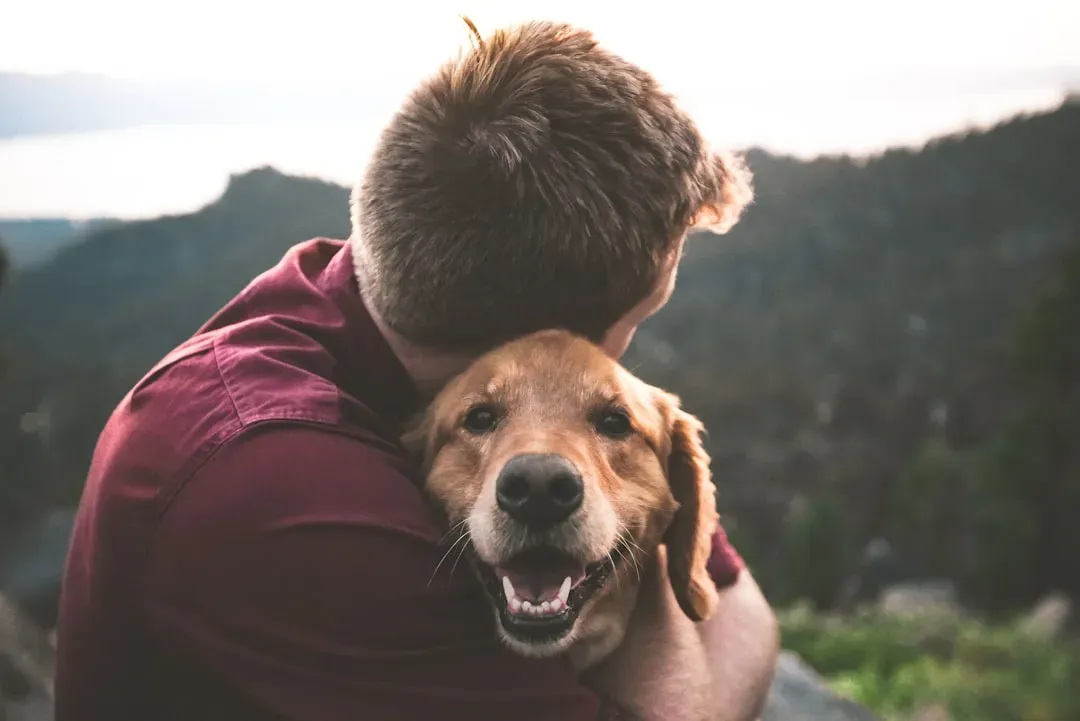
Regular play sessions provide dogs with a variety of benefits, including stress relief, improved cognitive function, and an overall sense of happiness and contentment. Play is one of the most accessible and immediate ways to interrupt the cycle of mutual low energy between a grieving owner and a mirroring dog. Even brief, low-effort moments of engagement matter.
Dogs love routine, and keeping a dog’s daily schedule as consistent as possible means they are less likely to feel stressed or depressed because they know what to expect and when. During periods of personal difficulty, maintaining basic routines for your dog isn’t just an act of care for them. It’s a quiet structure that can hold you, too.
Providing a dog with enough mental stimulation throughout the day is important in keeping their mood up and preventing depressive episodes, and regular walks, socialization, and training are helpful. Managing anxiety and comforting a dog through major life transitions or changes in the home environment also matters considerably. The relationship between a dog’s wellbeing and an owner’s emotional state is genuinely a two-way street, and tending to one often lifts the other.
Conclusion: Your Dog Knows What You Sound Like When You’re Okay

Worried about unexpected vet bills?
Pet insurance can cover thousands in unexpected vet costs. Get a free quote from Lemonade in under 2 minutes.
Get My Free Quote →Sponsored · Opens Lemonade.com

- What to Do If You Encounter a Bobcat in the Wild - June 5, 2026
- 10 Comforting Beliefs About What Happens to Pets After They Cross The Rainbow Bridge - June 5, 2026
- Florida’s Manatees Are Making a Major Comeback - June 5, 2026