


In the animal kingdom, parenting roles vary dramatically across species. While we often think of mothers as the primary caregivers, numerous species flip this script entirely, with father figures taking on the bulk—or even all—of the childcare responsibilities. From seahorses that literally give birth to emperor penguins braving Antarctic winters to protect their eggs, these devoted dads demonstrate remarkable paternal dedication. This role reversal challenges our assumptions about gender roles in nature and reveals fascinating evolutionary adaptations. Let’s explore 18 remarkable species where males step up to nurture, protect, and raise the next generation, often through extraordinary measures that showcase nature’s diverse approaches to ensuring offspring survival.
15. Seahorses The Ultimate Pregnant Dads
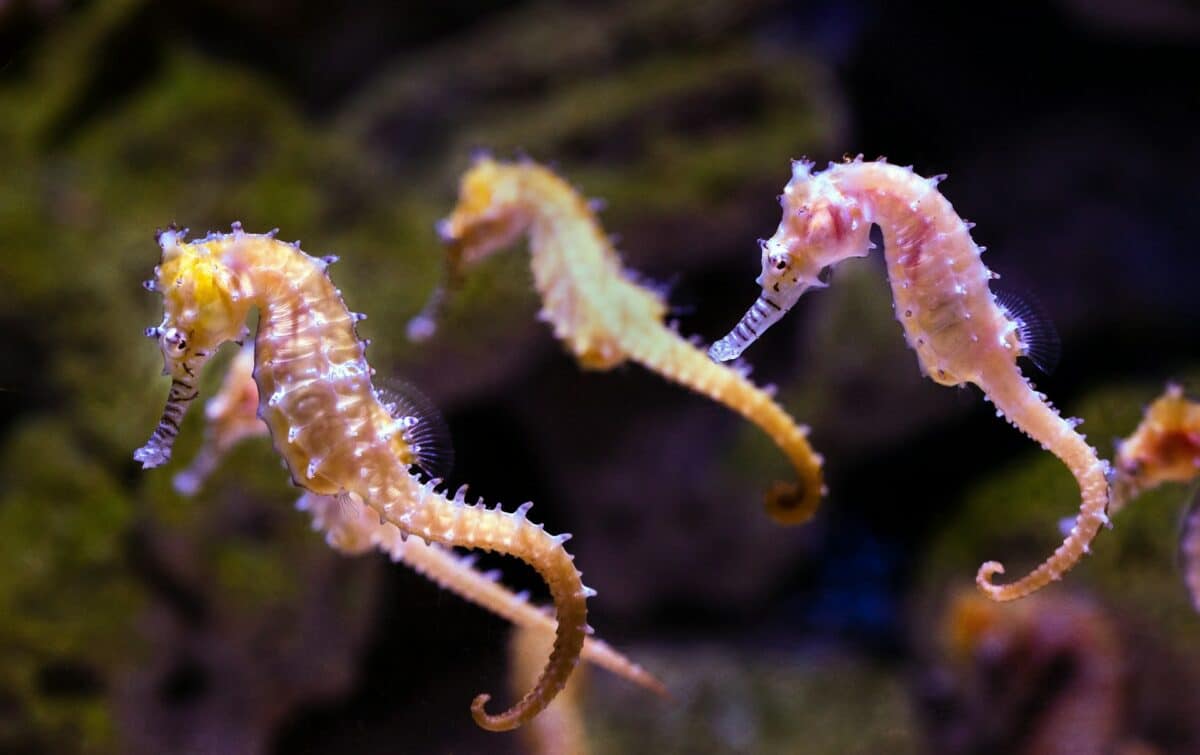
Seahorses represent perhaps the most extreme example of male parental care in the animal kingdom. In this remarkable species, the female deposits her eggs into the male’s specialized brood pouch, where fertilization occurs. The male then carries the developing embryos for 2-4 weeks, depending on the species. During this pregnancy, the father provides oxygen through a complex network of capillaries and regulates the salinity of the water in the pouch to match the surrounding ocean. When the time comes, the male experiences muscular contractions similar to labor, actively birthing fully-formed miniature seahorses into the water. This unique reproductive strategy allows females to produce more eggs while males handle the development process, demonstrating one of nature’s most complete role reversals in parenting.
14. Emperor Penguins Surviving Antarctic Winters

Emperor penguins showcase extraordinary paternal dedication in one of Earth’s harshest environments. After the female lays a single egg, she transfers it to her mate using a delicate maneuver that keeps the egg from touching the ice. She then returns to the sea to feed while the father balances the egg on his feet and covers it with a warm brood pouch for about 64-67 days during the brutal Antarctic winter. During this period, temperatures plummet to -40°F (-40°C) with winds up to 125 mph (200 km/h), and the males huddle together for warmth while fasting completely—losing up to 45% of their body weight. When the chicks hatch, fathers produce a nutrient-rich substance from their esophagus to feed them until the mothers return with food from the sea. This extreme sacrifice enables emperor penguins to breed during winter when predation risks are lower, giving their offspring a better chance of survival when spring arrives.
13. Rheas The South American Single Dads

Rheas, large flightless birds native to South America, feature a fascinating reproductive system where males handle virtually all parenting duties. A male rhea creates a ground nest and mates with multiple females, who each deposit their eggs in his nest before departing. A single male’s nest may contain 20-60 eggs from different females. Once the clutch is complete, the father incubates the eggs for approximately 40 days, aggressively defending the nest against predators—including the mother rheas who sometimes attempt to steal eggs. After hatching, the father rhea protects and guides his chicks for up to six months, teaching them to forage and evade predators. The male even performs “distraction displays,” feigning injury to draw predators away from his young. This polygamous but male-centered care system allows females to deposit eggs with multiple males, maximizing their reproductive output while ensuring each clutch receives dedicated parental care.
12. Giant Water Bugs Egg-Carrying Insects

Giant water bugs (family Belostomatidae) demonstrate remarkable paternal care among insects, where such behavior is relatively rare. After mating, the female glues her eggs onto the male’s back or wings in a process called “back-brooding.” The male carries between 100-150 eggs for 2-4 weeks, regularly breaking the water’s surface to expose the eggs to air and prevent fungal growth. He also performs “brood pumping” movements to circulate fresh, oxygenated water over the eggs. If the eggs are removed experimentally, males actively search for them, showing a strong investment in their offspring’s survival. This arrangement benefits the female by freeing her to produce more eggs while ensuring her existing offspring receive protection. Males with eggs are less mobile and more vulnerable to predators, making this a significant sacrifice for offspring survival in a group where parental care of any kind is uncommon.
11. Sandpipers Arctic Nesting Duties

Several sandpiper species, including the spotted sandpiper and red-necked phalarope, exhibit a complete reversal of conventional sex roles. Female sandpipers are larger and more colorfully adorned than males—a reversal of the typical pattern in birds. After mating, females may lay eggs for multiple males, who each assume full incubation responsibilities. The male sandpiper incubates the eggs for about 21 days and then raises the precocial chicks alone for several weeks, teaching them to feed and evade predators. This system, called polyandry, allows females to maximize their reproductive output by mating with multiple males while ensuring each clutch receives dedicated care. The arrangement evolved in harsh northern breeding grounds where the short summer season creates pressure to produce as many offspring as possible during favorable conditions, and the pattern of male-only care allows females to produce up to four clutches per season instead of just one.
10. Darwin’s Frogs Vocal Sac Nurseries

Darwin’s frogs (Rhinoderma darwinii and R. rufum) from Chile and Argentina display one of the most unusual paternal care behaviors in the amphibian world. After the female lays eggs on the forest floor, the male guards them until they reach the tadpole stage. Then, in an extraordinary act, he uses his tongue to collect the wriggling tadpoles and stores them in his vocal sac—an expandable pouch typically used for calling. Inside this moist, protected pouch, the tadpoles complete their metamorphosis over 6-8 weeks, during which time the father cannot feed and must manage his own survival carefully. When development is complete, the father opens his mouth wide and fully-formed froglets hop out. Sadly, Darwin’s frogs are critically endangered, with Rhinoderma rufum possibly extinct, meaning this remarkable paternal behavior may be disappearing from our planet. This system protects developing offspring from aquatic predators and desiccation in their relatively dry forest habitat.
9. Three-Spined Sticklebacks Underwater Nest Guardians

Male three-spined sticklebacks demonstrate elaborate parenting behaviors that begin even before mating. The male constructs an intricate tunnel-shaped nest from plant materials, held together with a special kidney secretion that acts like glue. He then performs a zigzag dance to attract females, who deposit eggs in the nest before departing. A single male may collect eggs from multiple females before taking on full parental duties. The father guards the nest against predators, oxygenates the eggs by fanning them with his fins for improved water circulation, and removes fungus-infected eggs to prevent disease spread. After hatching, he continues protecting the young fry for about two weeks, retrieving any that stray by catching them in his mouth and spitting them back into the nest. This intensive paternal care significantly increases offspring survival in these small freshwater fish and represents one of the most well-studied examples of male parental investment in fish species.
8. Marmosets and Tamarins Primate Co-Parenting Champions

Among primates, marmosets and tamarins stand out for their extraordinary paternal involvement. Males of these small South American monkeys typically carry infants almost constantly from the day they’re born, only returning them to the mother for nursing. In species like the cotton-top tamarin, fathers carry infants approximately 60-70% of the time during their first month of life. This intensive care extends to sharing food with offspring and teaching them crucial foraging skills. The evolutionary reason for this arrangement relates to the high metabolic demands on females, who often give birth to twins weighing up to 25% of the mother’s body weight combined. Without substantial paternal assistance, females could not meet the energetic demands of nursing while maintaining their own health. This cooperative breeding system, which sometimes includes older siblings as helpers, exemplifies a family-centered approach to raising young that more closely resembles human parenting patterns than most other non-human primates.
7. Jacanas The Wading Bird Harem-Keepers
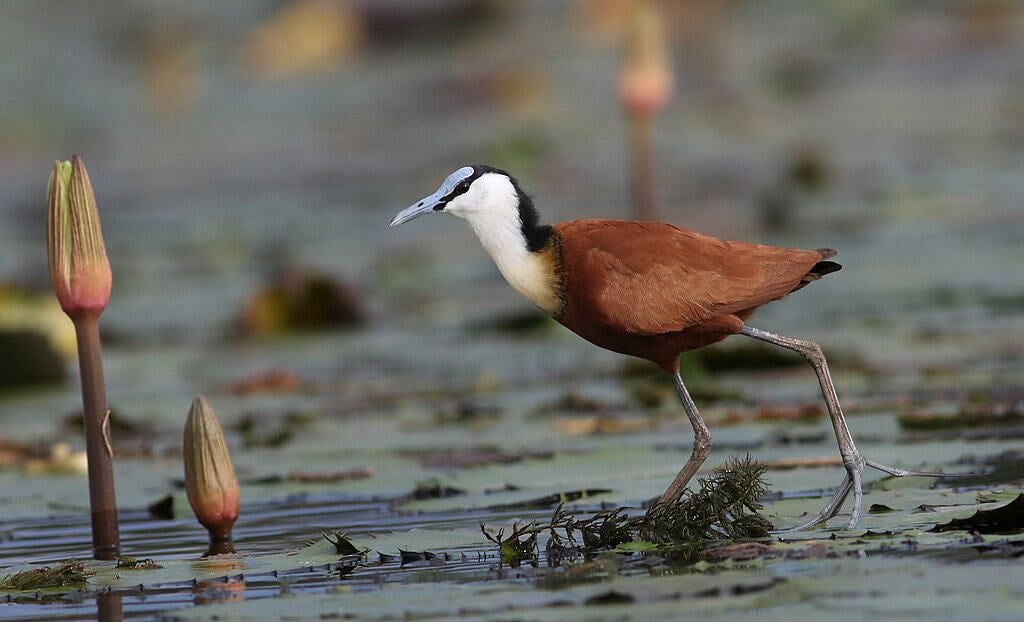
Jacanas, sometimes called “lily-trotters” for their ability to walk on floating vegetation, exhibit a fascinating polyandrous mating system where sex roles are completely reversed. Female jacanas are substantially larger than males and compete aggressively for territories containing multiple males. After mating, each male receives a clutch of eggs to incubate alone on a floating nest. The father handles all incubation duties for approximately 22-28 days, even developing brood patches (areas of bare, vascularized skin that transfer heat efficiently to eggs). If the floating nest is threatened by rising water, the male may carefully pick up each egg under his wings and move them to a safer location. After hatching, males continue as sole caregivers, sheltering chicks under their wings during rain and leading them to feeding areas. This system enables females to produce up to four times more offspring annually than would be possible with conventional parental roles, representing an evolutionary adaptation to environments where adult mortality is high and maximizing reproductive output is advantageous.
6. Midwife Toads Ankle-Wrapped Egg Carriers

Midwife toads (genus Alytes) native to Europe and North Africa have evolved a unique paternal care strategy that keeps them connected to their offspring quite literally. After the female lays a string of 20-60 eggs, the male fertilizes them externally and then wraps the egg strands around his own ankles like bracelets. He carries these eggs for 3-6 weeks, regularly soaking them in water to keep them moist and occasionally exposing them to sunlight to prevent fungal growth. The male continues his normal activities during this period, albeit somewhat hindered by his precious cargo. When the eggs are ready to hatch, the father visits a suitable water body where the tadpoles emerge and begin their aquatic life stage. This terrestrial egg development reduces predation risks from aquatic predators during the vulnerable embryonic stage and allows reproduction in areas without permanent water bodies, as the father only needs to find water when the tadpoles are ready to hatch.
5. Great Hornbills The Devoted Walling Fathers

Great hornbills demonstrate an extraordinary commitment to family security through a remarkable nesting strategy. After selecting a suitable tree cavity, the mated pair works together to seal the female inside with a mixture of mud, food, and feces, leaving only a narrow slit. Once enclosed, the female lays 1-2 eggs and begins incubation. For the next 3-4 months, the male becomes the family’s lifeline, delivering food to his sealed-away family 8-10 times daily through the narrow opening. He collects and delivers a variety of fruits, insects, and occasionally small vertebrates, regurgitating the food directly into the cavity. This arrangement protects the mother and chicks from predators, but places enormous responsibility on the father, who must forage efficiently enough to feed himself and his family. Near the end of the nesting period, the female breaks out of the sealed cavity, rebuilds the wall, and joins the male in feeding their offspring through the opening until the young birds are strong enough to break out themselves, typically 80-90 days after hatching.
4. Giant African Bullfrog The Hydration Engineer
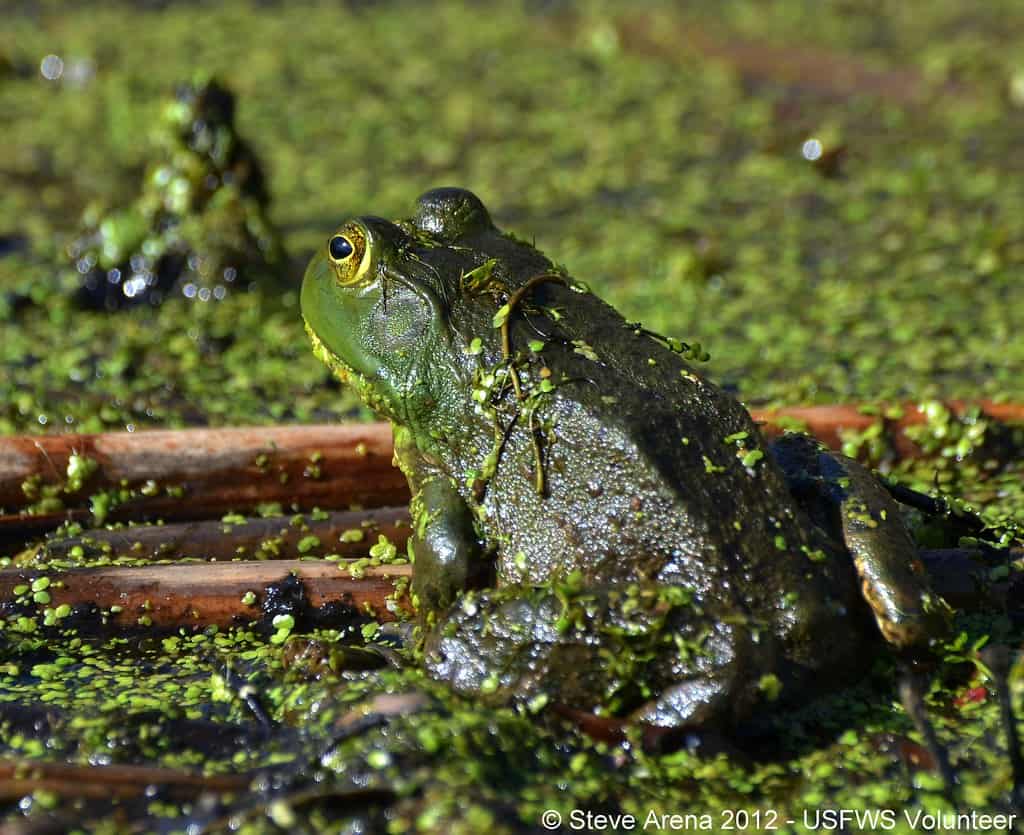
The giant African bullfrog (Pyxicephalus adspersus) exhibits remarkable paternal dedication in an arid environment where water is precious and ephemeral. Males, which can grow to over 2 pounds, aggressively compete for breeding territories in temporary rain pools. After mating and external fertilization, the male remains with the thousands of eggs while the female departs. As the shallow pools begin to evaporate under the hot African sun—potentially stranding and killing the developing tadpoles—the father takes dramatic action. He uses his powerful hind legs to dig channels connecting the drying nursery pool to deeper water bodies, creating escape routes for his offspring. This engineering feat can involve moving significant amounts of mud and sand, sometimes extending channels for several meters. In extreme cases, males have been observed using their bodies to block channels they’ve created, sacrificing their own skin moisture to ensure tadpoles can slip past them into deeper water. This exceptional behavior significantly increases survival rates in an unpredictable environment where rainfall patterns can be erratic.
3. Poison Dart Frogs Piggyback Transportation Specialists
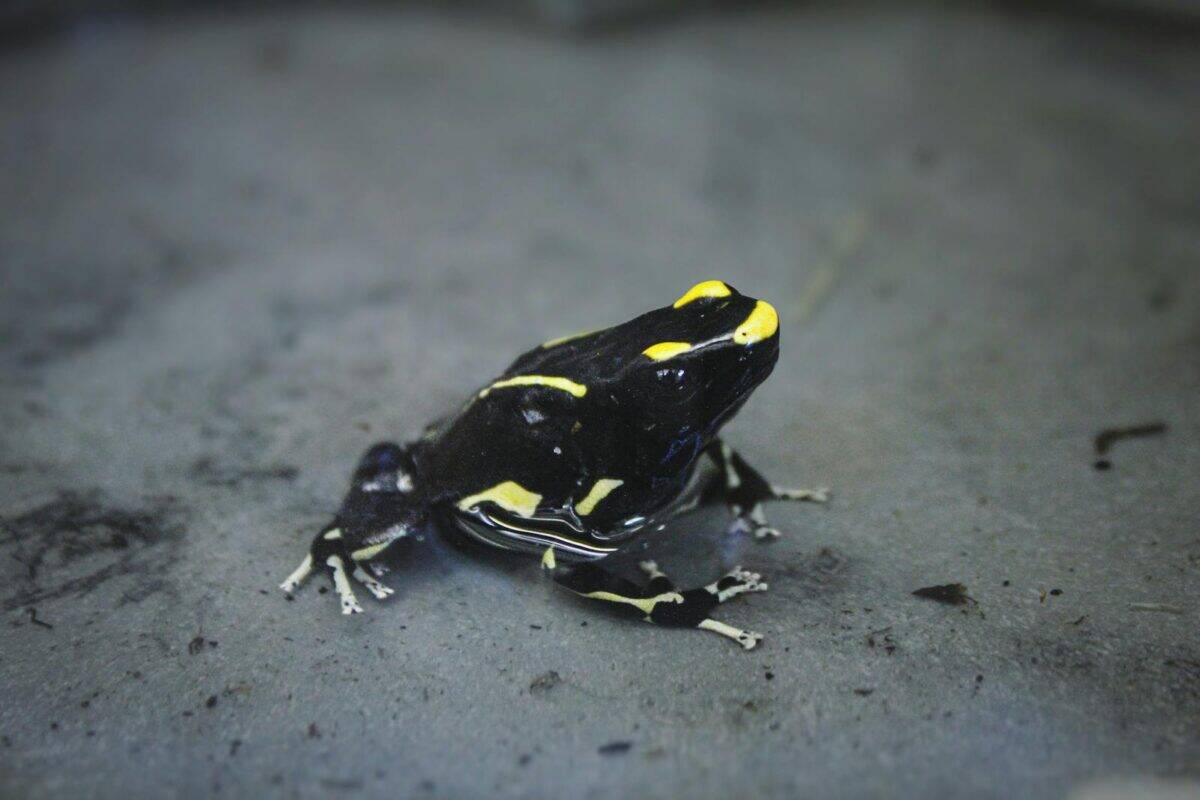
Several species of poison dart frogs exhibit elaborate paternal care behaviors that go far beyond most amphibians. After the female lays eggs on the forest floor, the male keeps them moist and guards them from predators for 10-18 days. When the eggs hatch into tadpoles, the father allows them to wriggle onto his back, where they secrete a mucus that helps them adhere to his moist skin. He then carries the tadpoles—sometimes up to 6 at once—through the rainforest, climbing trees to find suitable water-filled plant cavities (phytotelmata) such as bromeliad tanks. The male carefully places each tadpole in its own individual water reservoir, effectively preventing sibling competition and cannibalism. In some species like the strawberry poison dart frog (Oophaga pumilio), the father continues to visit each tadpole’s location, calling to the mother who follows him to deposit unfertilized nutritive eggs that serve as food for the growing tadpoles. This complex parental tag-team strategy ensures offspring survival in an environment where suitable aquatic habitats are small and scattered.
2. Mouth-Brooding Cichlids The Oral Incubators
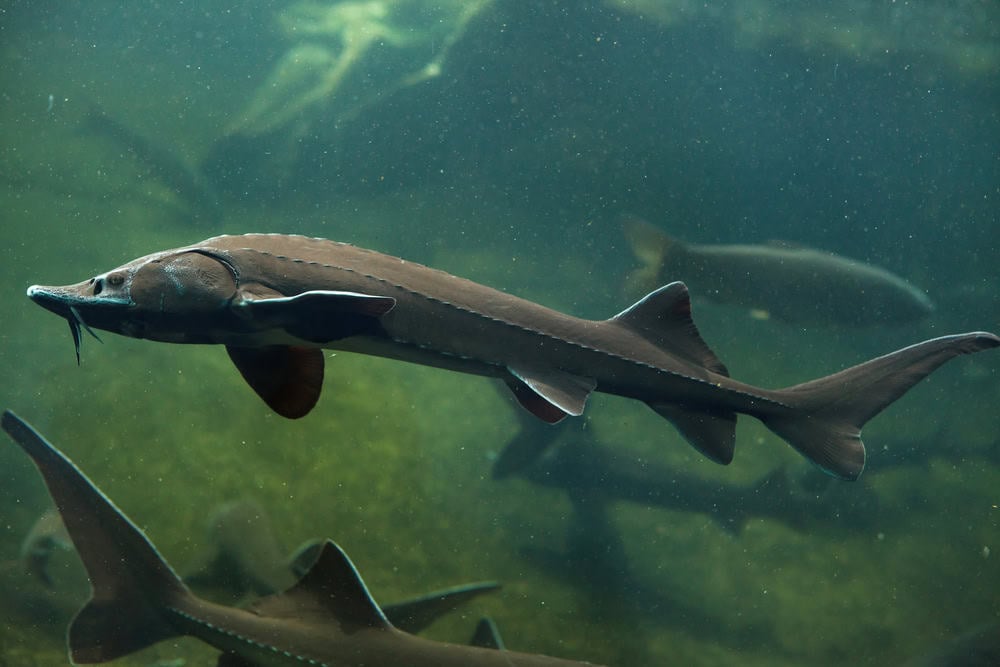
Among the cichlid family of freshwater fish, several species have evolved paternal mouth-brooding, where males incubate eggs and fry in their mouths. After the female lays eggs on a cleaned substrate, the male fertilizes them and immediately scoops them into his mouth. For the next 2-4 weeks, the father carries the developing eggs and then the hatched fry in his buccal cavity, unable to feed during this entire period. The mouth provides an ideal protected environment with constant oxygen flow over the developing embryos. When predators approach, the father can quickly recall free-swimming fry back into his mouth using specific signals. Species like the Tanganyikan cichlid Xenotilapia flavipinnis may carry over 70 young in their mouths at once. This paternal sacrifice comes at a significant cost—males can lose up to 30% of their body weight during the brooding period. The evolutionary advantage comes from extremely high survival rates of offspring in predator-rich environments where unprotected eggs and fry would face almost certain predation.
1. Pipefish Seahorse Cousins with Specialized Pouches
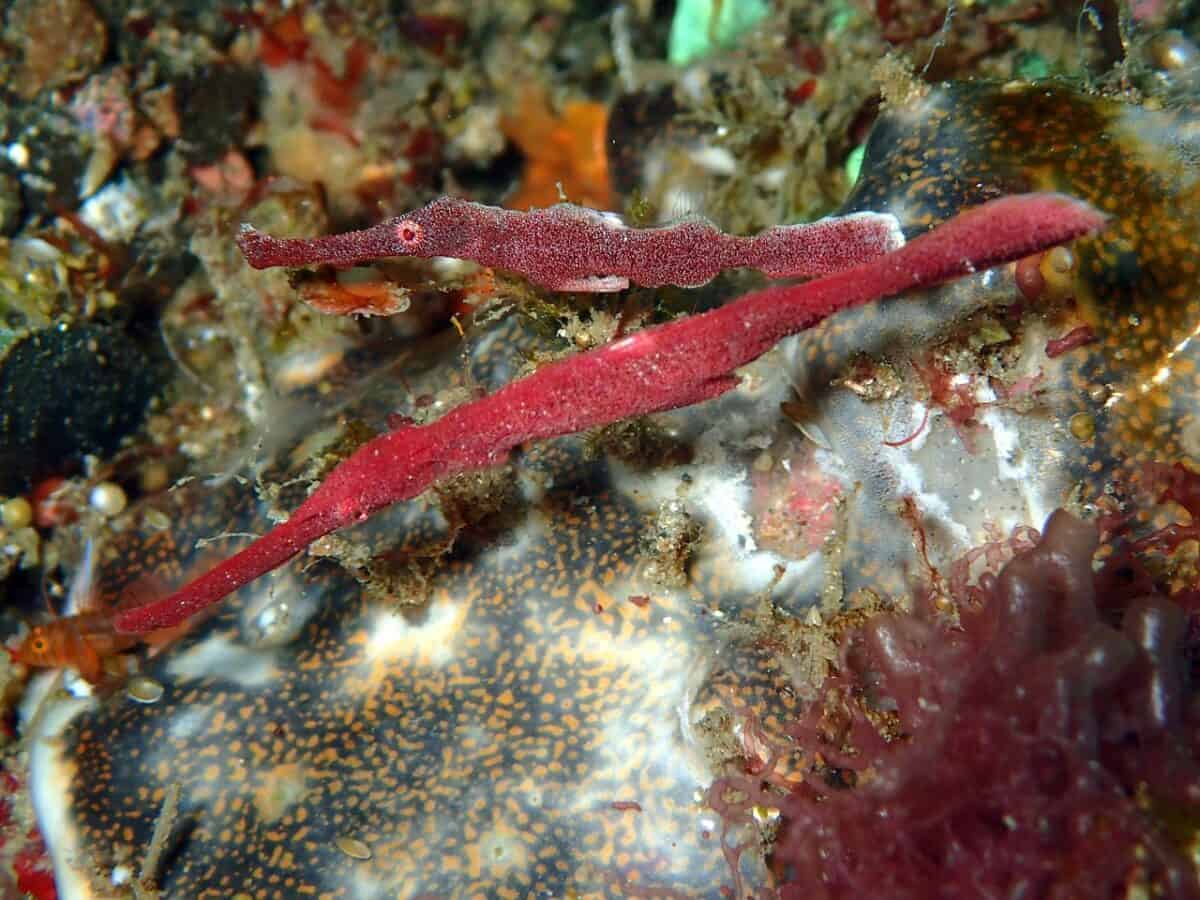
Pipefish, close relatives of seahorses, share their cousins’ male pregnancy adaptation but with fascinating variations. In these slender, straight-bodied fish, males possess specialized brood pouches on their ventral surface rather than on the abdomen. During mating, the female deposits eggs into the male’s pouch, where they’re fertilized and embedded in specialized tissues. The father’s body undergoes remarkable physiological changes, with the pouch lining becoming more vascularized to transfer oxygen, nutrients, and even immune factors to the developing embryos. In some species, males are actually selective about mates, preferring larger females who produce higher-quality eggs—another reversal of typical sexual selection patterns. After a pregnancy lasting 2-6 weeks depending on the species, the male experiences muscular contractions to expel fully-formed juvenile pipefish from his pouch. Research has shown that the male contribution goes beyond mere physical protection, with genetic studies revealing that fathers transfer essential antibodies to their developing young, giving them immunological protection during their vulnerable early life stages.
Conclusion:
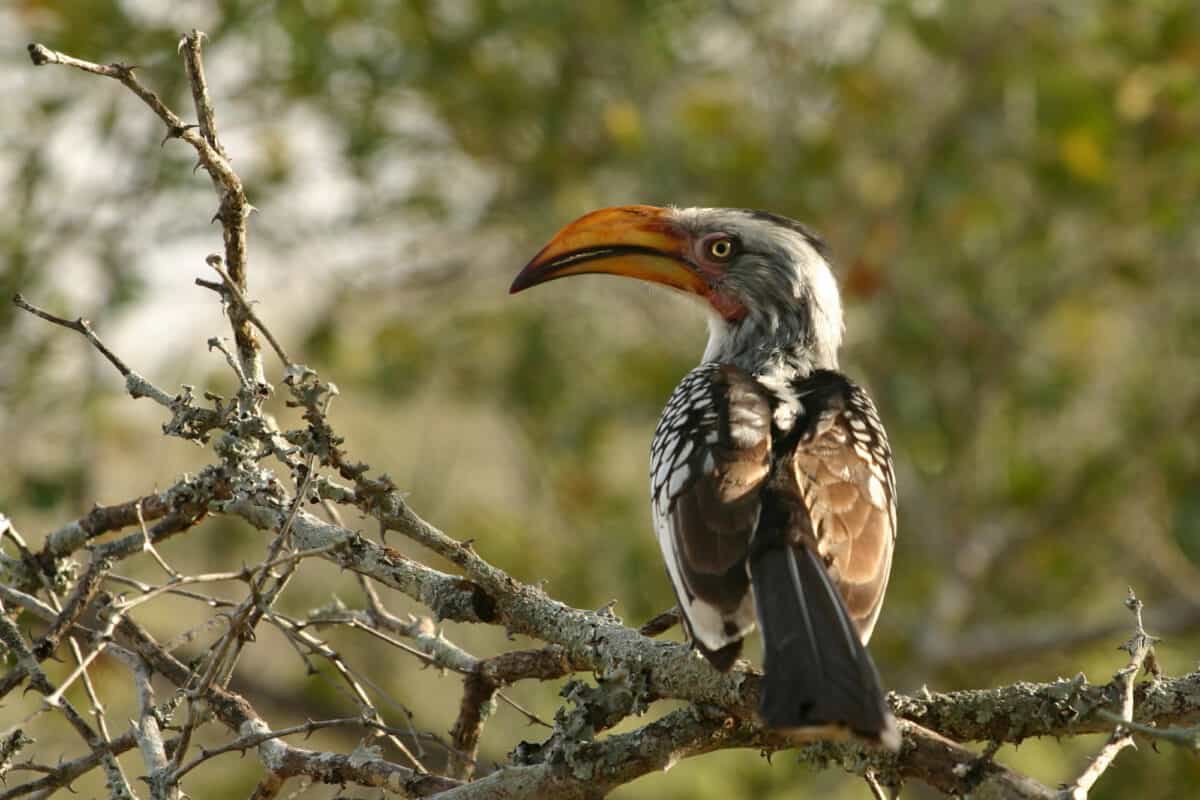
The examples highlighted in this list reveal just how diverse and surprising fatherhood can be in the natural world. From fish and frogs to birds and primates, male parental care has evolved independently across many lineages, often in response to environmental pressures, reproductive strategies, or survival needs. In some cases, fathers go to extraordinary lengths—fasting for months, carrying young inside their own bodies, or transporting offspring one by one through dangerous terrain. These behaviors challenge long-held assumptions that caregiving in nature is largely maternal and show that, in many species, dads are not only equal partners but sometimes the primary—or sole—caregivers. Such role reversals and paternal sacrifices underscore the richness of evolutionary strategies and highlight the flexibility of life in adapting to ecological demands. Whether it’s a tiny frog storing tadpoles in his throat or a massive penguin braving arctic blizzards for the sake of a single egg, these devoted dads demonstrate that in the wild, fatherhood comes in many extraordinary forms.

As a little kid, I fell in love with nature, wildlife, and animals. Living in the USA, South Africa, Italy, China and Germany gave me the opportunity to discover the world's Wildlife. My favorite animals are Mountain Gorillas, Siberian Tigers, and Great White Sharks.
I'm a certified PADI Open Water Diver, went to Everest Base Camp and Trekked Gorillas in Uganda. I hold a Master of Science in Economics and Finance.
Please send any feedback to feedback@animalsaroundtheglobe.com
- 14 Fascinating Facts About Giraffes - June 24, 2026
- 10 Birds of Prey You Can Spot in the U.S. - June 24, 2026
- 11 Animals That Survive Brutal Winters in the Rockies - June 24, 2026