
You might think the ocean’s pitch-black depths are lifeless wastelands. Nothing could be further from the truth. Thousands of feet below the surface, where sunlight never penetrates and pressure could crush a car, an astonishing variety of life not only exists but thrives with breathtaking ingenuity.
These creatures have evolved adaptations so bizarre and brilliant that they seem pulled from science fiction. Some manufacture their own light through chemical reactions. Others possess transparent skulls or grow to monstrous sizes. Many have evolved predatory strategies that put surface dwellers to shame. Let’s journey into the abyss to meet 14 of the most remarkable beings on Earth, proving that darkness is no barrier to life’s incredible persistence.
The Deep-Sea Anglerfish: Nature’s Ultimate Ambush Predator
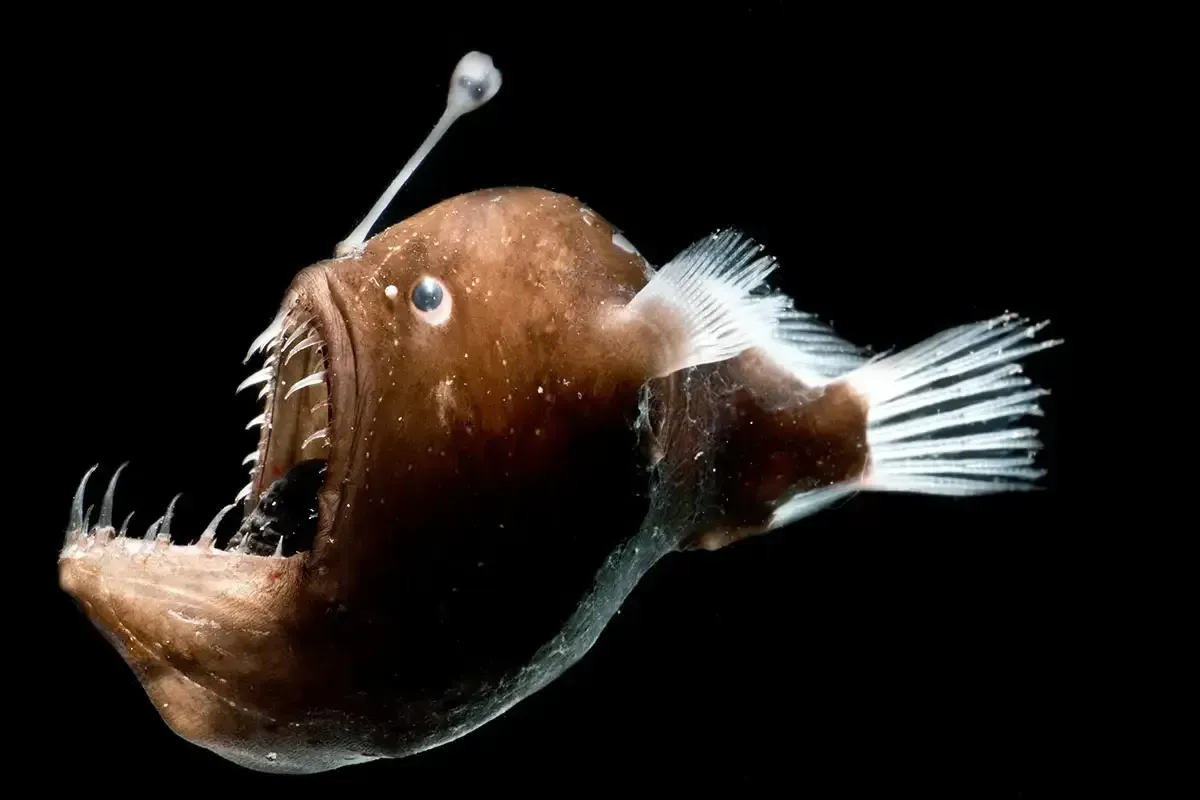
Picture a fishing rod that glows in the dark, attached to a grotesque creature with fangs longer than your thumb. The deep-sea angler, known also as Melanocetus johnsoni, is a grotesque-looking fish with an elongated dorsal spine that supports a light-producing organ known as a photophore. This isn’t just decorative. The anglerfish uses this appendage like a fishing lure, waving it back and forth to attract its prey and lying still waiting for its hapless prey wanders close enough then gulps it down with lightning speed.
Here’s the thing: these predators look absolutely terrifying in photos, but they’re surprisingly small. Despite its ferocious appearance, the angler is a small fish, reaching a maximum length of only about five inches. Its skin is specially adapted to reflect blue light, and since nearly all light emitted from bioluminescent creatures is blue, the anglerfish can be nearly invisible to other deep sea animals.
Living at depths over 3,000 feet where temperatures hover near freezing, these fish have mastered survival in conditions that would kill most life forms instantly. Deep sea anglerfishes have evolved a cunning method of hunting using their bright lure, which gets its glow from specialized bacteria. Think of it as having your own personal neon sign in the world’s darkest nightclub, except the guests you’re attracting become your dinner.
Only females possess the famous glowing lure. Males are drastically smaller and exist mainly to find a female and attach themselves permanently, fusing their bodies together in one of nature’s strangest reproductive strategies. It’s extreme, sure, but when finding a mate in endless darkness is nearly impossible, evolution gets creative.
The Vampire Squid: Darkness’s Misunderstood Scavenger
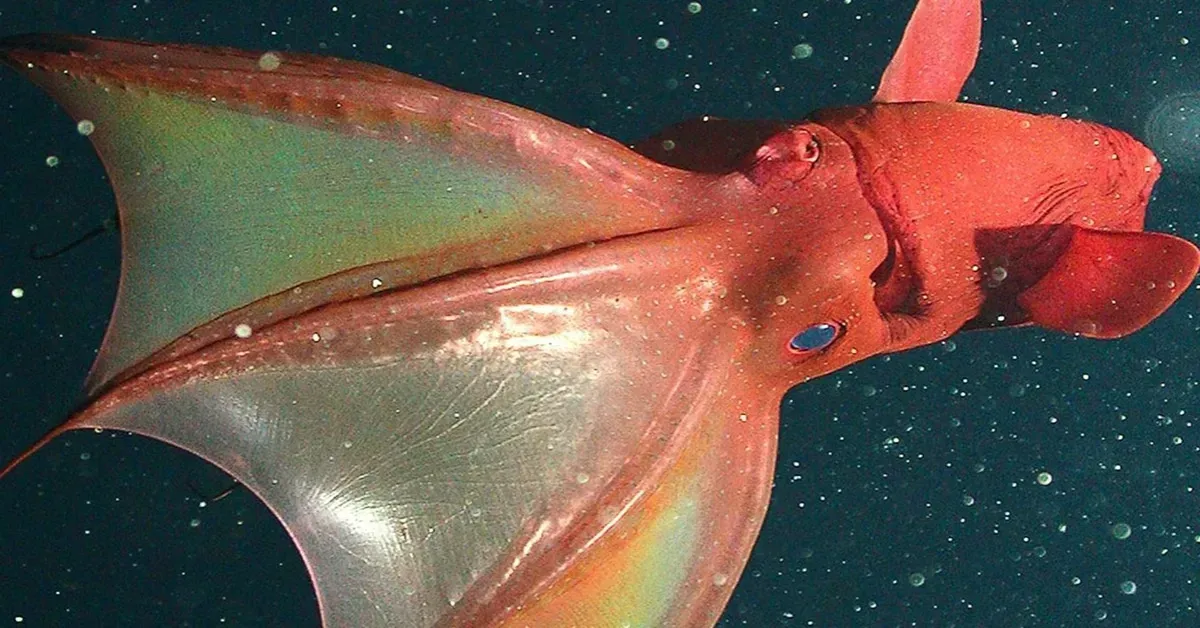
Despite its blood-red color and its horror-story name, vampire squid won’t suck your blood, as these cephalopods are scavengers that prefer to munch on dead plankton and other matter that drifts down to the deep ocean. The name comes from its appearance rather than its diet. When threatened, this creature does something theatrical and unsettling.
The vampire squid inverts its body, raising its arms over its head to expose rows of spikes to deter attackers, and if that’s not deterrent enough, they also eject a sticky, bioluminescent mucus which can startle, disorient, and confuse predators. Imagine being chased in the dark and your pursuer suddenly explodes with glowing blue slime. That’s enough to make anyone reconsider their life choices.
They will eject a sticky cloud of mucus that contains blue lights which will flash for about 10 minutes, which gives the animal time to disappear into the darkness. The ink sticks to the predator, meaning that they will be easy to spot for a while, and other animals can avoid them. It’s like throwing a glitter bomb at a burglar, except the glitter glows and marks them as dangerous to everyone else in the neighborhood.
The vampire squid occupies an unusual ecological niche. Rather than actively hunting, it drifts through the water column collecting marine snow, bits of organic debris that sink from the surface. Vampire squids also have bioluminescent organs on the ends of their arms which help the animal attract prey. They’re less vampire, more janitor with a flair for the dramatic.
The Barreleye Fish: The Creature With a Transparent Head
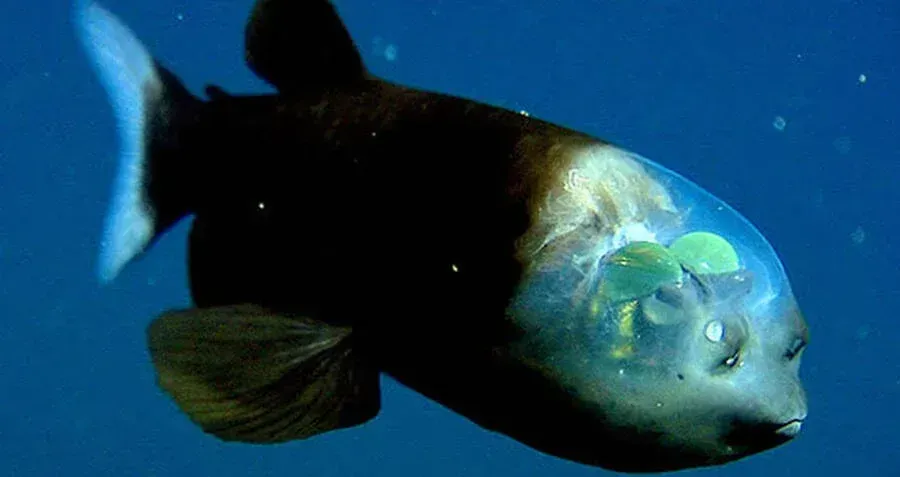
Let’s be real, some deep-sea creatures seem like they shouldn’t be physically possible. Thousands of feet beneath the surface of Monterey Bay off California, scientists captured footage of a fish with a bulbous, translucent head and green orb-like eyes that peer out through its forehead, known as a barreleye fish (Macropinna microstoma), which is very rarely seen. Yes, you read that correctly. Its head is transparent.
In the light of the ROV, the barreleye’s eyes glowed bright green and could be easily seen through the clear, fluid-filled shield that covers the fish’s head, and these eyes are incredibly light-sensitive and can be oriented straight up, towards the top of the fish’s head, or straight ahead. This isn’t just weird for the sake of being weird. This adaptation serves a specific purpose in the twilight zone of the ocean.
This adaptation allows it to stare upward through the darkness, watching for prey silhouetted against the faint light from above, and when it spots food, it rotates its eyes forward to capture them precisely. The transparent dome protects those ultra-sensitive eyes from the stinging cells of jellyfish whose tentacles it steals food from. Talk about having your cake and eating it too.
Although they appear green, the lenses are actually tinted with a yellow pigment that helps these bizarre fish distinguish between sunlight and bioluminescence. Living at depths between 2,000 and 2,600 feet, these fish have evolved one of the most unusual hunting strategies in the ocean. They hover motionless in the water, gazing upward like tiny biological telescopes, waiting for the perfect moment to strike.
Scientists didn’t even know about the transparent shield until the 2000s. Before then, specimens brought to the surface were damaged, and researchers had no idea what these fish really looked like in their natural habitat. It makes you wonder what other secrets the deep sea is still hiding.
The Gulper Eel: A Mouth Beyond Reason
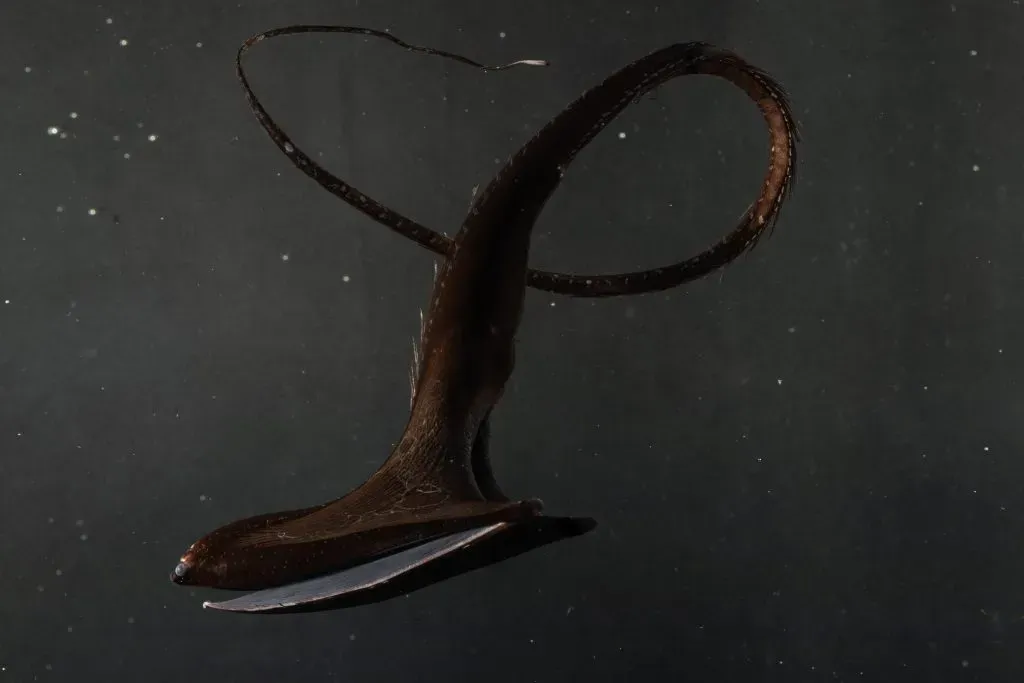
The umbrellamouth gulper, known scientifically as Eurypharynx pelecanoides, is one of the most bizarre looking creatures in the deep ocean with its most notable attribute being the large mouth. When I say large, I’m talking about a mouth that looks bigger than the rest of the entire body. This enormous mouth is much larger than the eel’s body and is loosely hinged, and can be opened wide enough to swallow an animal much larger than itself.
Honestly, it looks like someone inflated a snake’s head to ridiculous proportions and gave it a tail with a glowing tip. The end of the tail is tipped with a light-producing organ known as a photophore, and through a process known as bioluminescence, the photophore glows pink and can give off occasional red flashes to attract fish close to its enormous mouth. The eel can’t chase prey effectively, so it waits and lures instead.
Since the eel has very tiny teeth, it probably does not eat large fish on a regular basis, and the large mouth may be an adaptation to allow the eel to eat a wider variety of prey when food is scarce. It can also be used like a large net as the eel can swim into a large groups of shrimp or other crustaceans with its mouth wide open, scooping them up as it goes. Imagine swimming through a swarm of krill with your mouth wide open like an underwater vacuum cleaner.
The gulper eel also has a very long, whip-like tail, and specimens that have been brought to the surface in fishing nets have been known to have their long tails tied into several knots. Living between 500 and 6,000 feet deep, these eels represent evolution’s response to an environment where every meal could be your last for weeks.
The Giant Isopod: Deep-Sea Roly-Poly on Steroids
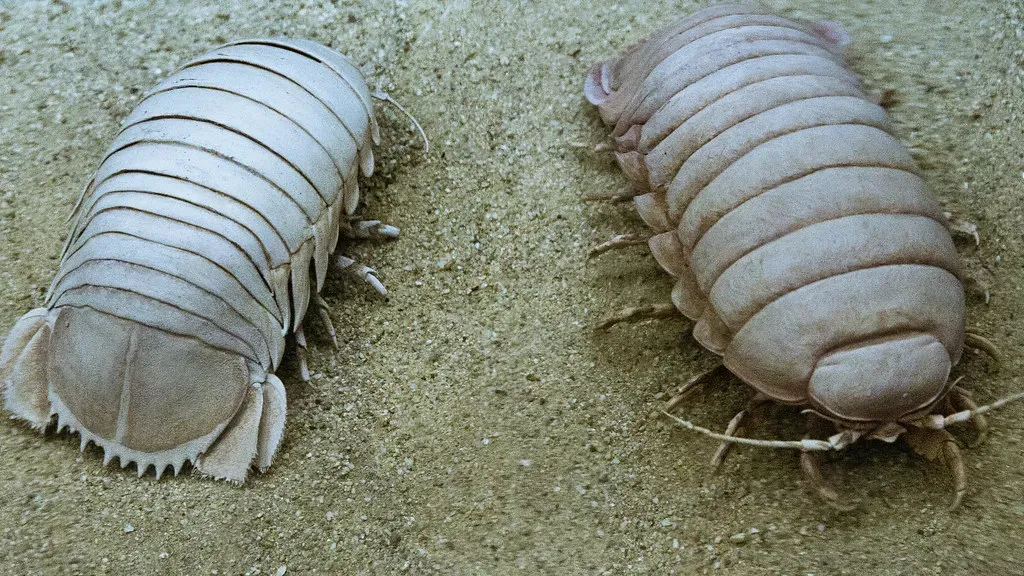
Imagine a pill bug the size of a house cat, and that’s the Giant Isopod (Bathynomus giganteus), one of the ocean’s most bizarre scavengers that live in the cold depths of the Atlantic and Pacific, crawling across the seafloor like armored tanks. If you ever played with roly-poly bugs as a kid, picture that same creature but scaled up to over 16 inches long. Nightmare fuel? Perhaps. Fascinating? Absolutely.
They are adapted to long periods of famine and have been known to survive over 5 years without food in captivity, and when a significant source of food is encountered, giant isopods gorge themselves to the point that they could barely move. This feast-or-famine lifestyle makes perfect sense when you consider how rarely food reaches the deep ocean floor.
What do they eat when food does arrive? Although generalist scavengers, these isopods are mostly carnivorous and feed on dead whales, fish, and squid. They’re essentially the cleanup crew of the abyss, nature’s underwater garbage disposal. Perhaps the creepiest part of the giant isopod is their enormous compound eyes, which include a reflective layer behind the retina called tapetum that reflects the tiniest fraction of light available at the bottom of the ocean floor and practically doubles the light available for the isopod to see.
Their enormous size is an example of deep-sea gigantism, a phenomenon where deep ocean creatures grow much larger than their shallow-water relatives, and Giant Isopods survive by scavenging the remains of dead whales, fish, and squid that sink to the bottom. The fossil record suggests these creatures have been around for over 160 million years. They’ve outlasted dinosaurs and will probably outlast us too.
The Frilled Shark: A Living Fossil With 300 Teeth
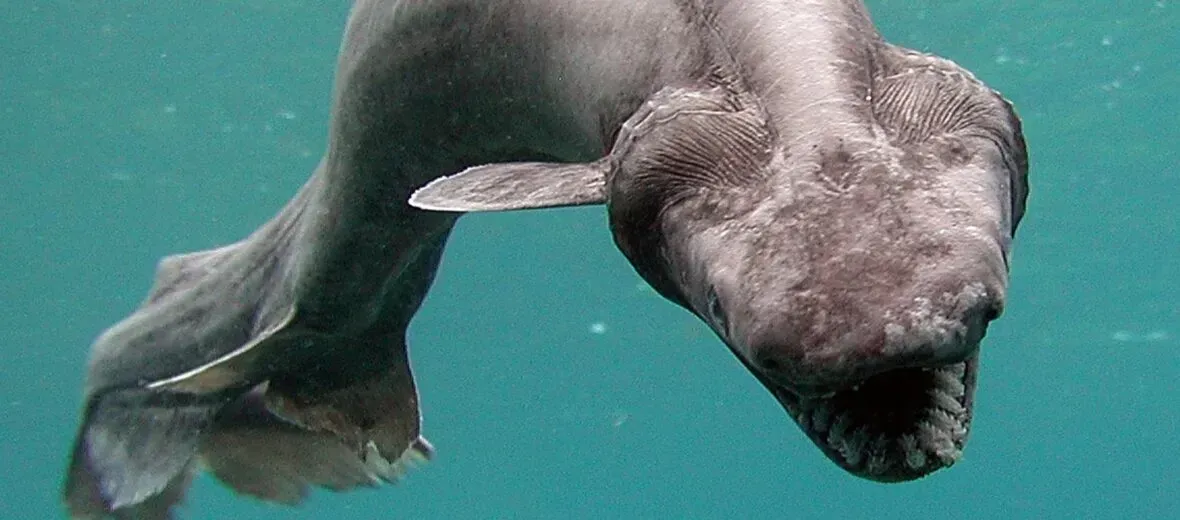
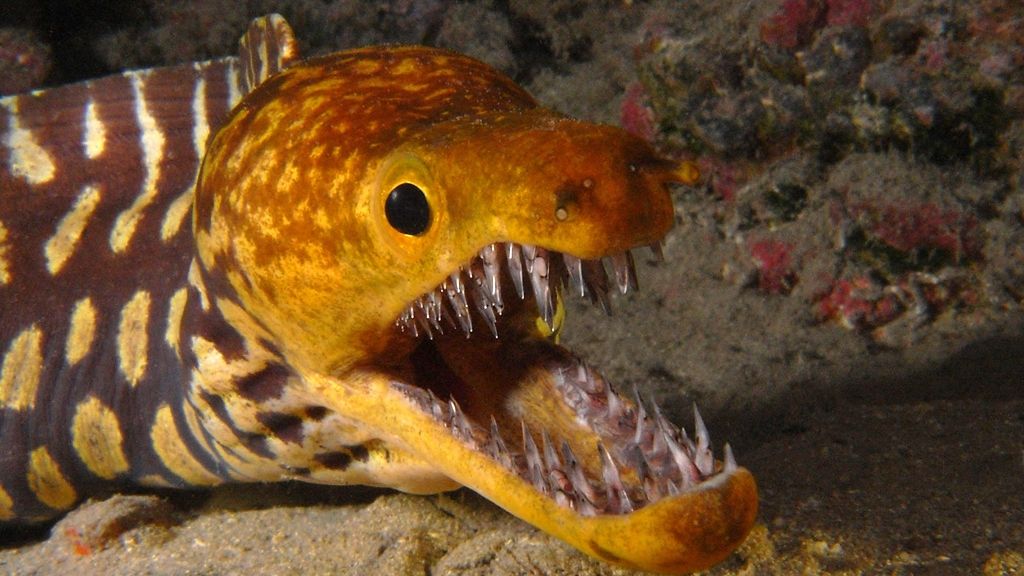
When the Frilled Shark was first discovered, scientists thought it was a sea serpent, and with its eel-like body and prehistoric features, it’s easy to see why, as this ancient predator dates back 80 million years and looks like it swam straight out of the fossil record. This is one creature that evolution decided didn’t need improvement.
Its six pairs of frilled gills give it its name and a haunting beauty, and the frilled shark hunts by lunging forward and swallowing prey whole, using over 300 backward-facing teeth arranged in rows that can strike with incredible speed despite its sluggish appearance. Those teeth aren’t designed for chewing. They’re designed to make sure nothing, absolutely nothing, escapes once caught.
Living at depths between 200 and 1,500 meters, frilled sharks hunt by ambush. They swim with their mouths open, displaying rows upon rows of needle-sharp teeth that might actually attract curious prey. Some researchers believe the white teeth against the dark mouth create a lure effect. Pretty clever for a fish that hasn’t changed much in millions of years.
The frilled shark proves that sometimes evolution hits upon a design so effective that there’s no reason to change it. While the world above transformed countless times, these sharks continued doing what they’ve always done: surviving in the depths with ruthless efficiency. They’re a window into Earth’s ancient oceans, swimming proof that the past isn’t always dead and buried.
The Dumbo Octopus: Adorable Despite the Abyss
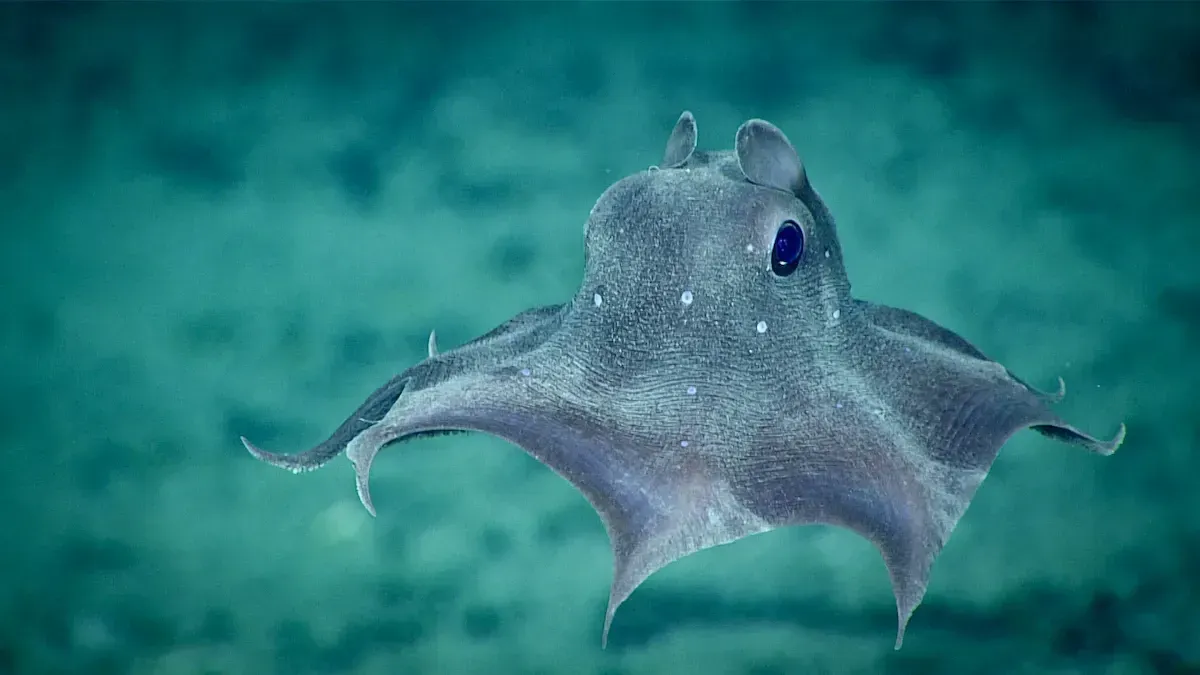
Dumbo octopuses live in the deep open ocean down to depths of at least 13,100 feet and perhaps much deeper, making this group the deepest living of all known octopuses, and life at these extreme depths requires the ability to live in very cold water and in the complete absence of sunlight. Yet somehow, against all odds, they’ve managed to be cute while doing it.
The name “dumbo” originates from their resemblance to the title character of Disney’s 1941 film Dumbo, having two prominent ear-like fins which extend from the mantle above each eye. Dumbo octopuses move by slowly flapping their ear-like fins, and they use their arms to steer, foraging on pelagic invertebrates that swim above the sea floor. Watching one swim is like watching an underwater elephant gracefully flying through eternal night.
Most dumbo octopuses are small, averaging just 8 to 12 inches in length, though the largest recorded individual measured nearly 6 feet long. Dumbo octopuses are naturally rare, and the deep sea is enormous, so these species have specialized behaviors to increase the likelihood that they can successfully reproduce anytime that they find a mate, as females apparently always carry eggs in different stages of development, and they are able to store sperm for long periods of time after mating with a male.
In the deep ocean, there are relatively few predators, which may be why Dumbo octopuses lack some of the defensive characteristics often seen in other cephalopods, as they don’t have an ink sac, so they can’t defend themselves by squirting ink at predators. When you live deeper than almost anything else, you don’t need as many defenses. The depth itself becomes protection.
What did you expect from something living nearly 7,000 meters down? These octopuses prove that even in Earth’s most extreme environments, life finds a way to not just survive but to do so with unexpected charm.
The Deep-Sea Dragonfish: Red Light Assassin
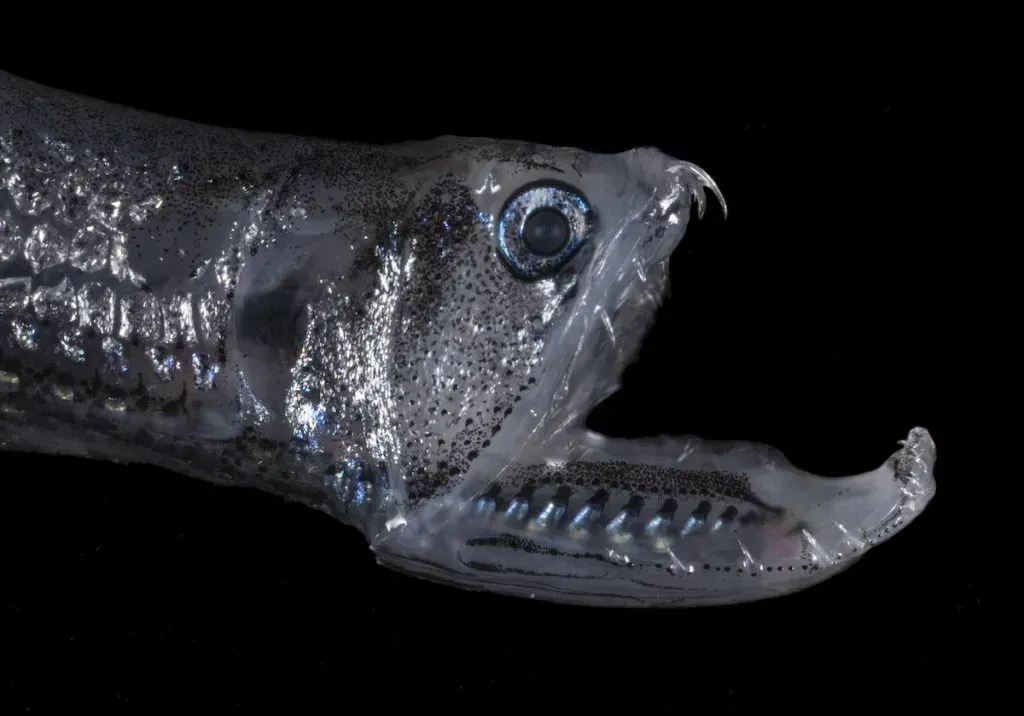
With its fang-like teeth and serpentine body, the Deep Sea Dragonfish (Stomiidae family) is one of the ocean’s most efficient predators that thrives in the pitch-black zones where light never reaches, glowing with its own eerie luminescence. These predators have developed a hunting strategy that’s almost unfair to their prey.
The stoplight loosejaw is the only known animal to use chlorophyll pigments inside its eyes, which allows it to see red wavelengths of light, and they use these red beams as a flashlight to search for prey. Since most deep-sea fish can only see blue light, these predators have a huge advantage as they can see their prey, but their prey can’t see them. It’s like having night vision goggles in a world where everyone else is blind.
Dragonfish exhibit extreme sexual dimorphism. Females can grow up to 16 inches long, while males barely reach 2 inches. The females are the hunters, equipped with elaborate light organs and impressive teeth. Males exist primarily to find a female and reproduce, then typically die. Short lives, but they serve their evolutionary purpose.
The red bioluminescence is particularly ingenious. Most deep-sea bioluminescence glows blue because blue light travels best through water. Red light gets absorbed quickly. So by producing red light that only they can see, dragonfish have created their own private spotlight that illuminates prey while remaining invisible to everyone else. That’s some seriously next-level predatory innovation.
The Viperfish: Fangs That Could Pierce Skulls
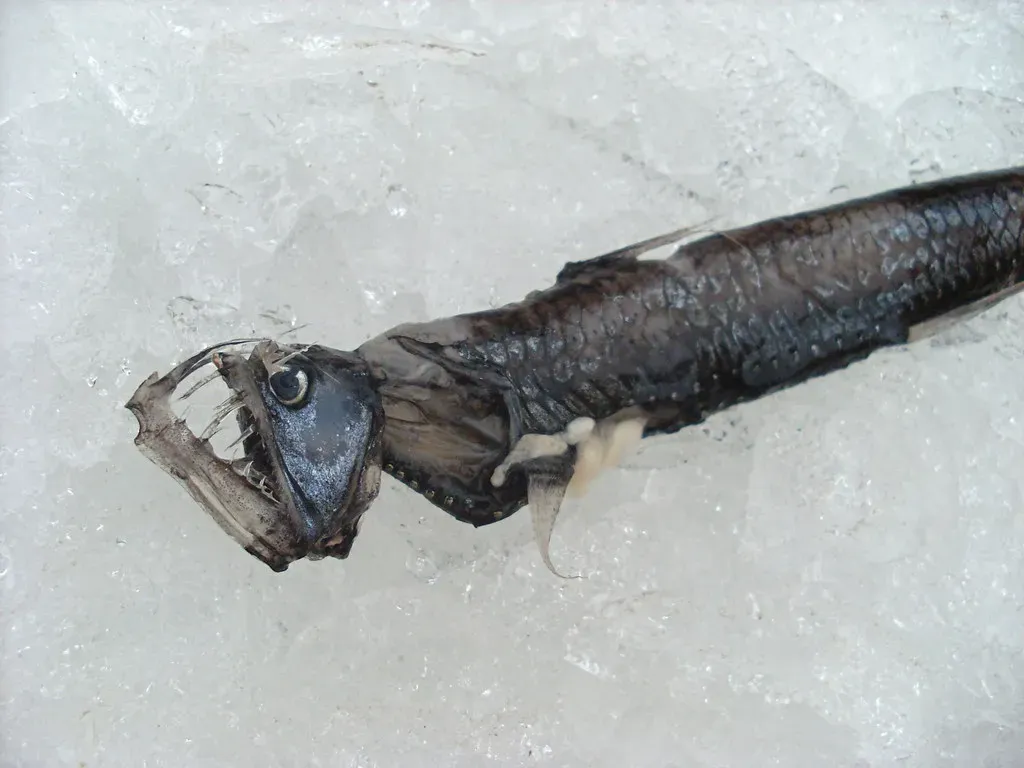
The viperfish is one of the most unusual-looking fish in the deep sea, known scientifically as Chauliodus sloani, it is one of the fiercest predators of the deep and can be easily recognized by its large mouth and sharp, fang-like teeth that are so large that they will not fit inside the mouth. Instead, they curve back very close to the fish’s eyes. Honestly, it looks like evolution gave this fish too many teeth and ran out of room.
Chauliodus species are recognized by their large, fang-like teeth which are so long that they would pierce the brain of the fish if misaligned. That’s not hyperbole. The teeth are legitimately dangerous to the viperfish itself if they don’t close their mouth correctly. The viperfish is thought to use these sharp teeth to impale its victims by swimming at them at high speeds, and the first vertebra, right behind the head, is actually designed to act as a shock absorber.
This fearsome looking creature has a long dorsal spine that is tipped with a photophore, a light-producing organ, and the viperfish uses this light organ to attract its prey through bioluminescence by flashing the light on and off like a fishing lure to attract smaller fish. It dangles the light, waits in the darkness, and when something investigates, those massive fangs ensure it never escapes.
In spite of its ferocious appearance, the viperfish is a relatively small animal, growing to about 11 or 12 inches in length and usually dark silvery blue in color, but its coloration can vary from green to silver or black. Like many deep-sea creatures, they are known to migrate vertically throughout the day, as during daytime hours they are usually found in deep water down to 5,000 feet, and at night they travel up to shallower waters at depths of less than 2,000 feet where food is more plentiful.
The Hatchetfish: Master of Light Camouflage
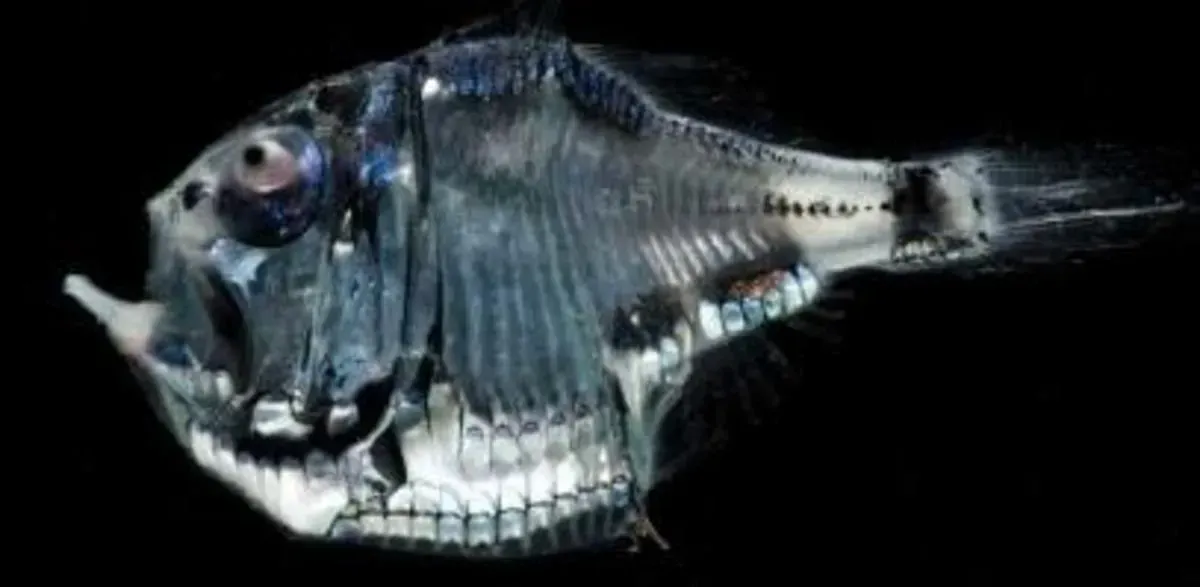
Hatchetfish are named for their thin, silver, hatchet-shaped bodies. Marine hatchetfish are creatures of the deep that have rows of light-producing organs along their bellies which shine a pale blue, matching the light from above and making the hatchetfish invisible to predators below. This technique, called counter-illumination, is one of nature’s cleverest invisibility tricks.
Here’s how it works: predators looking up from below normally see their prey silhouetted against the faint light filtering down from the surface. Lanternfish have adapted an ingenious ability to camouflage themselves using light, as these masters of disguise have rows of photophores on their underside that emit a faint glow which allows them to blend in with any remaining light that filters down from the surface in a process known as counter-illumination that renders them almost invisible to attackers hunting from below. Hatchetfish use the same strategy with remarkable precision.
The hatchetfish’s bioluminescent organs scatter light, including light used by predators to hunt, in a pattern that blends with the surrounding water, creating an invisibility cloak made of light to hide amidst the deepest darkness, and a hatchetfish may well avoid a violent end with its crypsis. They can adjust the intensity of their belly lights to match changing conditions as they move through different depths.
These fish are tiny, some species growing no larger than 2 to 3 inches. Their bulging eyes are adapted to detect the slightest movement above and below them. Living at depths between 200 and 1,000 meters, hatchetfish occupy the twilight zone where just enough light penetrates to make camouflage both necessary and possible. They’re proof that sometimes the best defense isn’t armor or speed, it’s simply not being seen at all.
The Pacific Blackdragon: Sexual Dimorphism Taken to Extremes
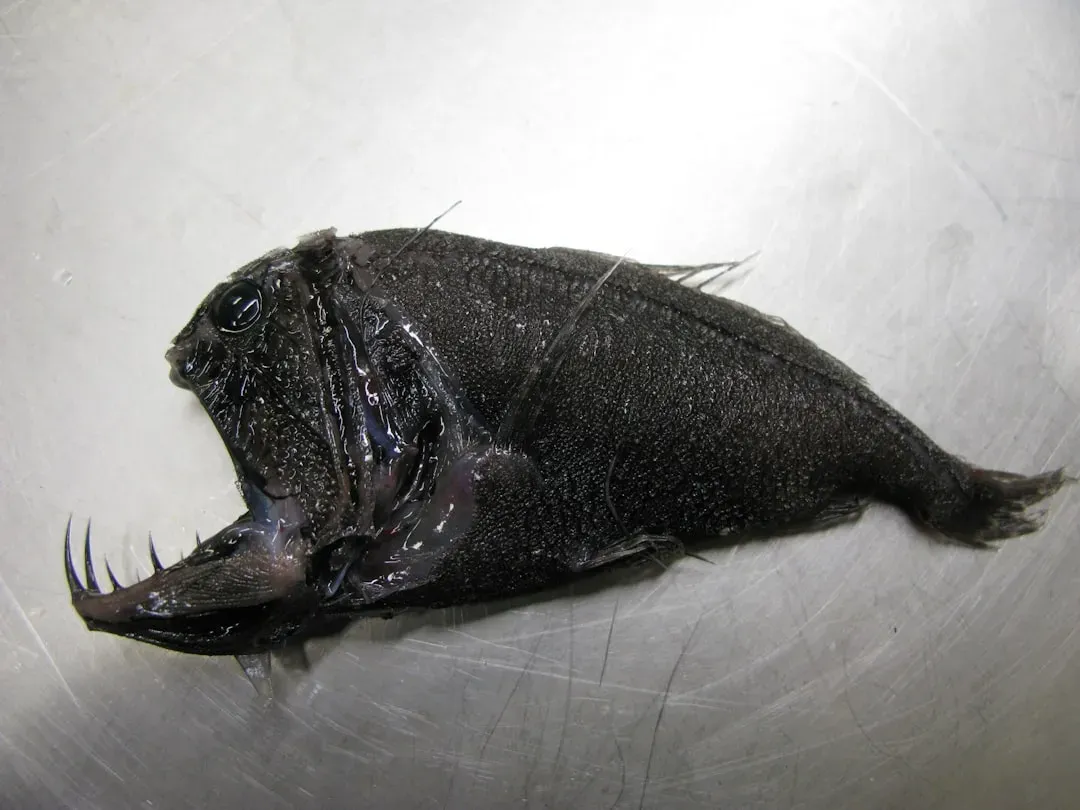
Pacific Blackdragon Fish slither through the deep ocean, these sleek, serpent-like fish haunt tropical and temperate waters of the eastern Pacific, and this species exhibits one of the most extreme cases of sexual dimorphism: The females grow to 16 inches, while the males only reach two inches. That’s not a typo. The males are literally eight times smaller than females.
Females possess a lure, much like the anglerfish, and have barbells on their bottom jaw that sense prey, and some of their prey is bioluminescent, but they’re unlikely to catch a glimpse of these fish as their black stomachs act as camouflage. The black stomach prevents any light from bioluminescent prey from showing through their body and giving away their position. It’s like having built-in blackout curtains.
The males, being so much smaller, have completely different lives than females. They lack the elaborate hunting structures and exist mainly to locate females for reproduction. It’s an extreme evolutionary strategy, but it works in an environment where finding a mate is extraordinarily difficult. Better to be small, require less food, and maximize your chances of survival until you find a female.
Females are formidable hunters, equipped with needle-sharp teeth and sensory barbels that detect the slightest vibrations in the water. They patrol the midnight zone like underwater dragons, which is fitting given their name. Meanwhile, the males drift through the same waters as tiny satellites, hoping to encounter a female before their short lives end.
The Fangtooth Fish: Proportionally the Largest Teeth in the Ocean
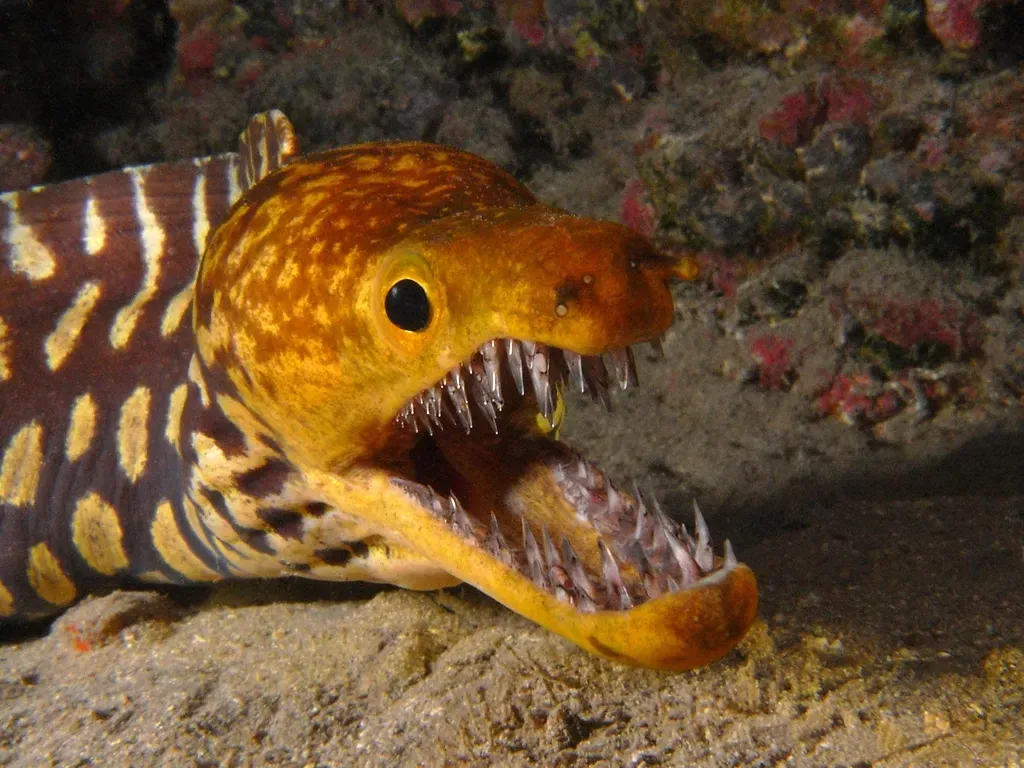
If you thought the viperfish had impressive teeth, meet the fangtooth. There’s no doubt that the common Fangtooth has a strikingly fearsome appearance, however, scientists say they are wholly harmless to humans since they only measure around 7 inches long when fully grown. The fangtooth holds the record for largest teeth relative to body size of any fish in the ocean.
The teeth are so disproportionately large that the fish has special sockets on either side of its brain to accommodate the lower fangs when it closes its mouth. Think about that for a moment. Its teeth are so big it needed to evolve skull modifications just to close its mouth without stabbing itself in the brain. That’s commitment to a predatory lifestyle.
Fangtooth live at depths up to 16,000 feet, making them one of the deepest-dwelling fish. They’re found in temperate and tropical oceans worldwide. Like many deep-sea predators, they undergo vertical migration, rising toward the surface at night to hunt in more productive waters, then descending back to the depths during the day.
These fish prefer a diet of squid, fish, and crustaceans, and they don’t have any glowing organs or other eye-catching features, so instead rely on their sense of smell and sound to seek out their prey. In the pitch-black depths, those massive teeth become tactile sensors as much as weapons, helping the fangtooth determine what it’s encountered in the dark.
The Blobfish: Misunderstood and Misrepresented
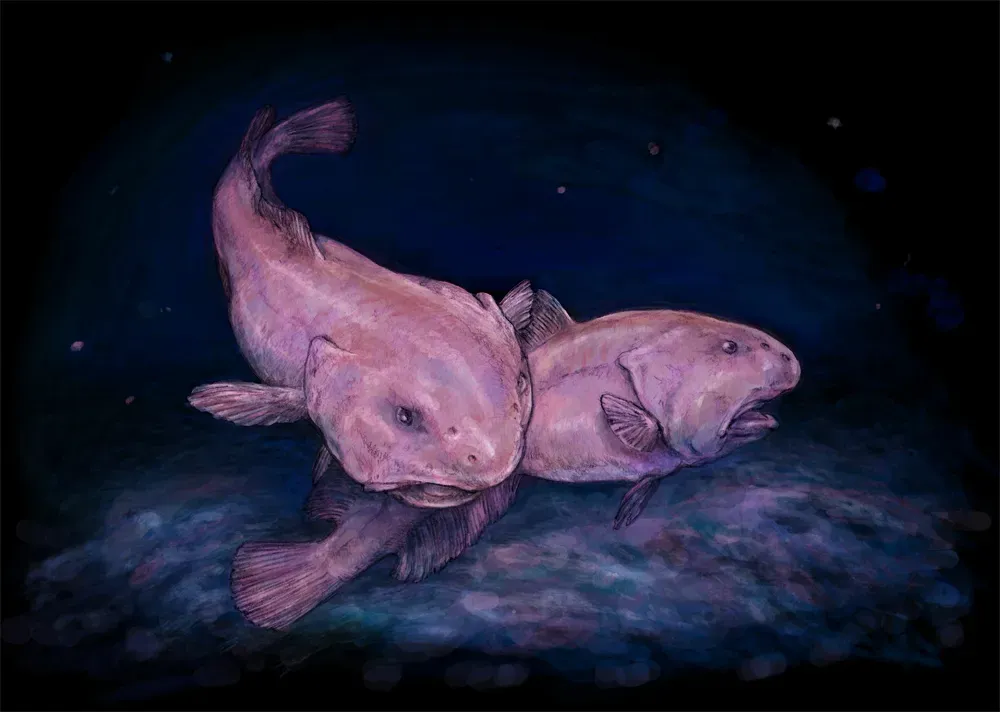
The blobfish might be famous as the world’s ugliest animal, but here’s the truth: that reputation is based on a misunderstanding. Few deep-sea creatures have captured public attention quite like the Blobfish (Psychrolutes marcidus), and living at depths of up to 4,000 feet, where pressure is immense, the blobfish’s gelatinous body is perfectly adapted to the environment, though at those depths, it looks like a normal fish, but when brought to the surface, the pressure difference causes its body to expand and deform, giving it its famously sad appearance.
Those photos you’ve seen of the blobfish looking like a melted puddle? That’s what happens when you take a creature adapted to crushing deep-sea pressure and drag it to the surface. This poor creature became an internet meme, often labeled the world’s ugliest animal, yet in its true home, far beneath the waves, it is a master of efficiency, soft, buoyant, and perfectly suited to the crushing weight of the deep. In its natural habitat, it actually looks relatively normal.
The blobfish’s gelatinous composition isn’t a defect. It’s an adaptation. Its flesh has a density slightly less than water, allowing it to float just above the seafloor without expending energy swimming. It simply drifts there, mouth open, swallowing any edible matter that floats by. Why waste energy chasing food when you can just wait for it to come to you?
This fish lives off the coasts of Australia and New Zealand, dwelling on the ocean floor where it feeds on crustaceans and other organic matter. It’s not ugly. It’s just been judged out of context, photographed in an environment it was never meant to survive in. Maybe there’s a lesson there about not judging creatures, or people, when they’re taken out of their element.
The Giant Oarfish: Sea Serpent of Legend
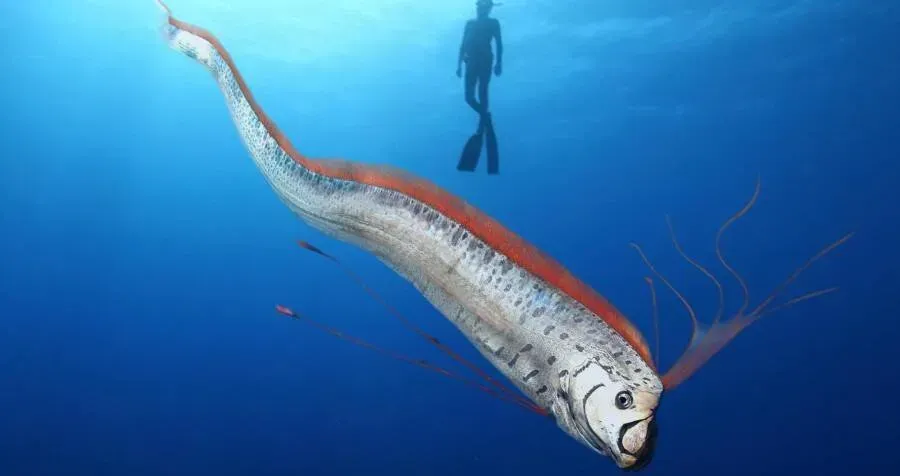
Imagine encountering a fish longer than a school bus undulating through the water like a living ribbon. Oarfish (Regalecus glesne) are the longest known bony fish in the ocean, capable of growing over 30 feet in length, and they typically inhabit the mesopelagic zone between 650 and 3,300 feet deep, where few creatures dwell and human encounters are rare. When these creatures wash ashore, people have historically mistaken them for sea serpents.
The giant oarfish has a distinctive appearance with a bright red dorsal fin that runs the entire length of its silvery body. It swims by undulating this fin in wave-like motions, propelling itself through the water in an eerily graceful manner. Seeing one alive in its natural habitat is extraordinarily rare, as they spend most of their lives in the twilight zone.
In Japanese folklore, oarfish are referred to as “Ryugu no tsukai,” or messengers from the sea god’s palace, and legend has it they rise to the surface ahead of major natural disasters like tsunamis or earthquakes, such theories gained traction in 2017, when a spate of oarfish sightings in the Philippines preceded a 6.7 magnitude earthquake in Mindanao. While there’s no scientific evidence supporting this connection, the correlation is intriguing enough to persist in local legends.
Oarfish feed on zooplankton, small crustaceans, and jellyfish, filtering them from the water as they swim. Despite their impressive size, they’re gentle filter feeders, not predators. The few times they’ve been observed alive by submersibles, they appear almost otherworldly, hanging vertically in the water column or swimming with their long bodies rippling like silk banners in the current.
Conclusion: Darkness Is Where Life Shows Its True Creativity
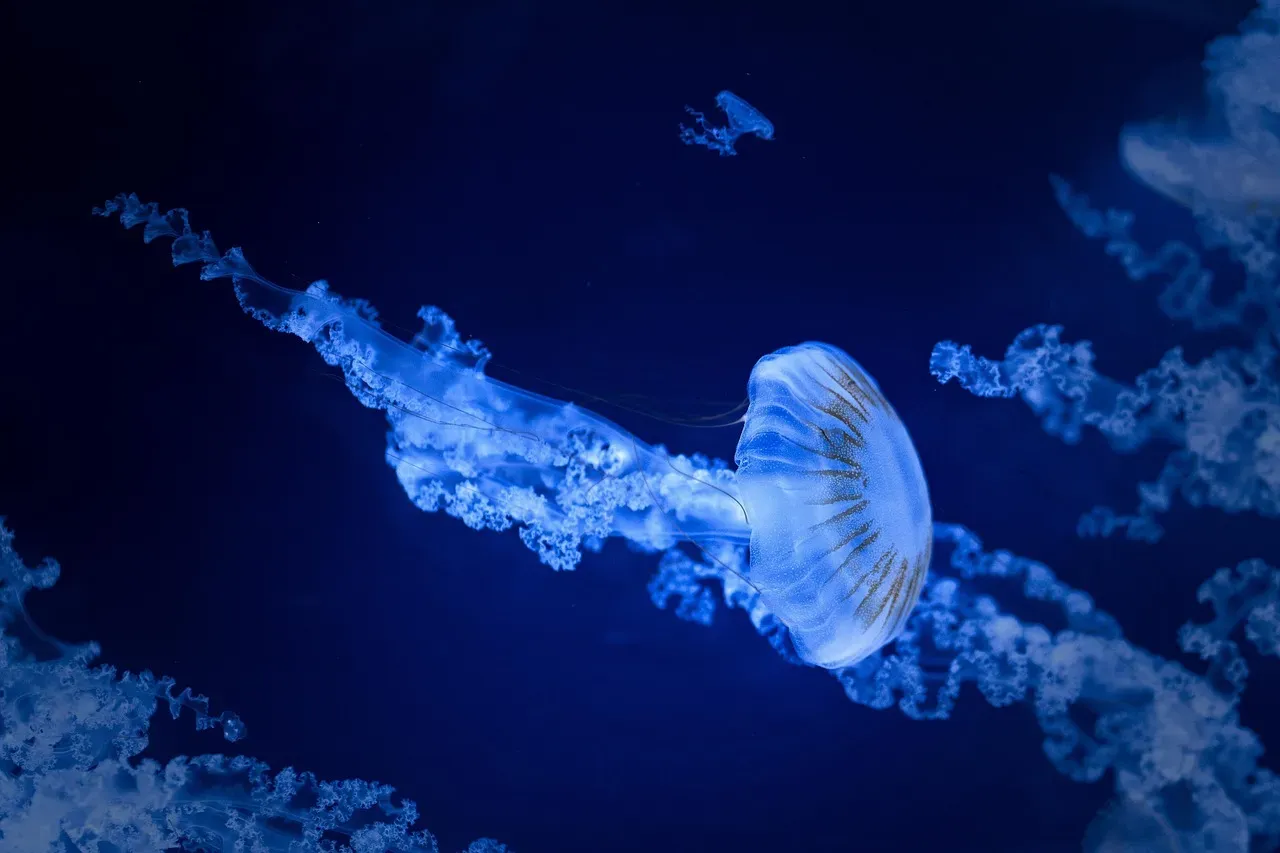
In a new study in Scientific Reports, MBARI researchers show that three quarters of the animals in Monterey Bay waters between the surface and 4,000 meters deep can produce their own light. That statistic alone should reshape how we think about the deep ocean. It’s not a barren wasteland. It’s a bioluminescent wonderland where roughly three out of every four creatures have evolved the ability to create their own light.
These 14 creatures represent just a fraction of the life thriving in Earth’s last great frontier. We often look to space for mystery, but the ocean is our planet’s true final frontier, as more than eighty percent of it remains unmapped, unobserved, and unexplored, and every new expedition reveals species we never dreamed existed, glowing, shape-shifting, or utterly alien. Each discovery reminds us how little we truly know about our own planet.
The deep sea has forced evolution to get creative in ways surface life never required. When photosynthesis is impossible, when finding food is a rare occurrence, when encountering a potential mate might happen once in a lifetime, life adapts with solutions that seem torn from science fiction. Transparent heads. Teeth longer than skulls. Bodies that glow on command. Mouths that swallow prey twice their size.
These creatures prove that darkness isn’t the absence of life. It’s simply a different stage where life performs with different rules. The abyss isn’t empty. It’s teeming with innovation, adaptation, and survival strategies that push the boundaries of what we thought possible. Every anglerfish, every dumbo octopus, every viperfish is a testament to life’s unstoppable persistence.
Which of these deep-sea survivors surprised you the most? The transparent-headed barreleye, or perhaps the tiny fangtooth with its brain-threatening teeth? What do you think we’ll discover next in the ocean’s depths?

- 10 Worst US Cities for Major Earthquakes - June 23, 2026
- The Biggest Single Snowstorm to Hit New York City - June 23, 2026
- 7 Facts About Grand Lake O’ the Cherokees - June 23, 2026